Monday, July 25, 2022

The Shoulder Never Moves Alone!


The Shoulder Never Moves Alone!

Have you noticed that a painful shoulder also gives you neck pain? Or upper back pain?

Does a stiff neck after a day’s work lead to painful shoulder movements?

Have you ever said, ‘I don’t know what hurts but my whole upper body feels painful’?

These are all common scenarios, where many a times every medical practitioner comes up with a different diagnosis- you may be diagnosed with frozen shoulder, cervical spondylosis, rotator cuff tear, neck muscle spasm and so on…

So what is the real diagnosis? What should be treated? And what is the solution?

The neck, shoulders and upper back and all inter-related, interlinked and inseparable joints. It doesn’t matter where the actual injury lies, all of these come into picture every time you move your arms.

The shoulder joint itself is not a single joint. It is a complex of 4 joints which work together to produce arm movements

  1. The shoulder-Glenohumeral joint
  2. The shoulder blade
  3. Joint between collar bone and shoulder blade-Acromioclavicular joint
  4. Joint between collar bone and chest bone-Sternoclavicular joint

So, for proper shoulder movements; complete & painfree movement of the shoulder blade, the collar bone and the upper back is also absolutely essential.


                                        Credits: Veritas Health


Apart from these connections, all these joints are connected via huge muscles which cover even the neck and upper back! These muscles form another layer of connection and are probably the most common reason why neck pain radiates till the shoulder or vice versa. 

 Instead of only focusing on which structure is injured, a correct long term solution would be to normalize the movements of all these joints and work on flexibility and strength of these muscles which span all three areas!

Isolated treatment of only one area will definitely give temporary relief, but if other connected areas are not targeted recurrences of pain are quite common.

If your work requires sitting for long periods, repetitive movements with the hands or if you simply want painfree shoulders, chalk up a program with your physiotherapist which takes care of-

1.       Shoulder mobility and flexibility

                                        Credits: Shutterstock

2.       Neck mobility


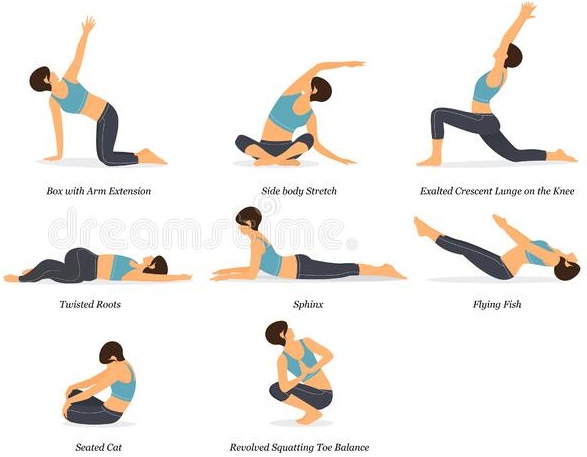
  3.Thoracic/upper back mobility

Cr                                          Credits: Dreamstime

4.       Shoulder blade strength


5.     Upper back and neck strength
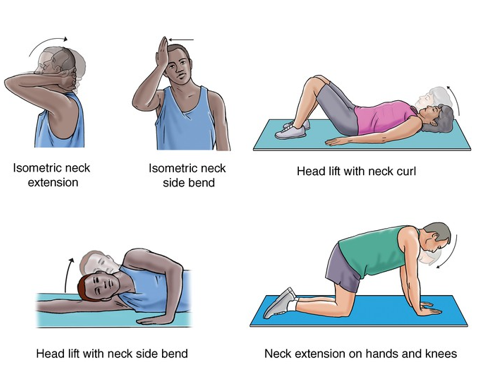

Generally, your physiotherapy program first focusses on the most painful/injured joint. Simultaneously, it is better to start working on the interlinked joints as well. 

     Pain relief of the hurting area is not a signal to stop your rehab, it is instead a good starting point to build up the strength & flexibility of the entire upper quadrant-the neck, upper back & shoulders! 

     Think holistic and work on durable solutions rather than a few quick fixes!!


     -Dr. Shriya Joshi (PT)

      Senior Musculoskeletal Physiotherapist

      Team Rehab Station, Pune


Thursday, July 21, 2022

Knee replacements in Haemophiliacs


Knee replacements are one of the most common surgeries today. Today, we will shed some light on knee replacements in patients with haemophilia.


What is haemophilia?

Haemophilia is a rare condition which affects the blood's ability to clot. When we hurt ourselves and there is a wound, the blood oozing out stops within a minute. This is called clotting. The sooner the blood clots, the better it is for the body, as we don't lose much blood. However, in patients with heamophilia, this clotting takes a lot of time !

Imagine blood flowing for a long time from a wound anywhere on your body!


How do we know it is haemophilia?

Usually it is diagnosed medically by blood tests. To make it simple for you to understand, these are the few symptoms:

1. Unexplained and excessive bleeding from cuts or injuries, or after surgery or dental work.

2. Many large or deep bruises.

3.Pain, swelling or tightness in your joints.


Now, let's address the topic of knee replacements in patients with haemophilia!

Why do these patients need replacements? When do they need replacements?

They have bleeding in joints multiple times. Due to the repetitive bleeding in the joint, the joints are damaged at an early age. This leads to severe disabilities in young age like deformities in knees and difficulty in walking. Hence they are require to replace these damaged joints to be able to carry out their functions normally.

before and after surgery physiotherapy is a must! Before surgery if the muscle strength is good because of exercises, regaining activities after surgery becomes easy. After knee replacement, they require physiotherapy to attain normal ranges and strength for rehabilitation into daily life!


Dr. Sukanya Dandekar (PT)
Neuro Physiotherapist 

Rehab Station, Pune

Wednesday, July 20, 2022

Tennis Elbow: Thinking beyond Pain Relief

TENNIS ELBOW: THINKING BEYOND PAIN RELIEF


 Pain in the elbow is experienced by at least 3% of the population every year. However most of us have suffered from various degrees of this type of pain at some point in our life. 

The most common cause of pain in the elbow is commonly known as Tennis Elbow.’ Tennis Elbow is inflammation due to an overuse injury of the muscles that arise from outer side of the elbow and run across the forearm and wrist. The reason why it is called tennis elbow is that it is commonly seen racquet sports players who practice repetitive movements in the backhand position with a flawed technique. However, this doesn’t mean that only tennis players will get tennis elbow. It can be experienced by anybody, even while doing small bouts of simple activity such as-

  • wringing clothes
  • lifting a heavy bag or object
  • Riding a bike
  • Cooking
  • Writing


With all the information available at the click of a button, many of us google our symptoms and treat them at home with simple remedies like icing. Most of the minor symptoms may subside temporarily but what about treating the cause? Not treating the cause can bolster into functional restriction in the long run.

What are my treatment options??

While there are multiple treatment options for this condition, most of which involve painkillers or steroid injections, physiotherapy is the safest option with statistically promising long term results.


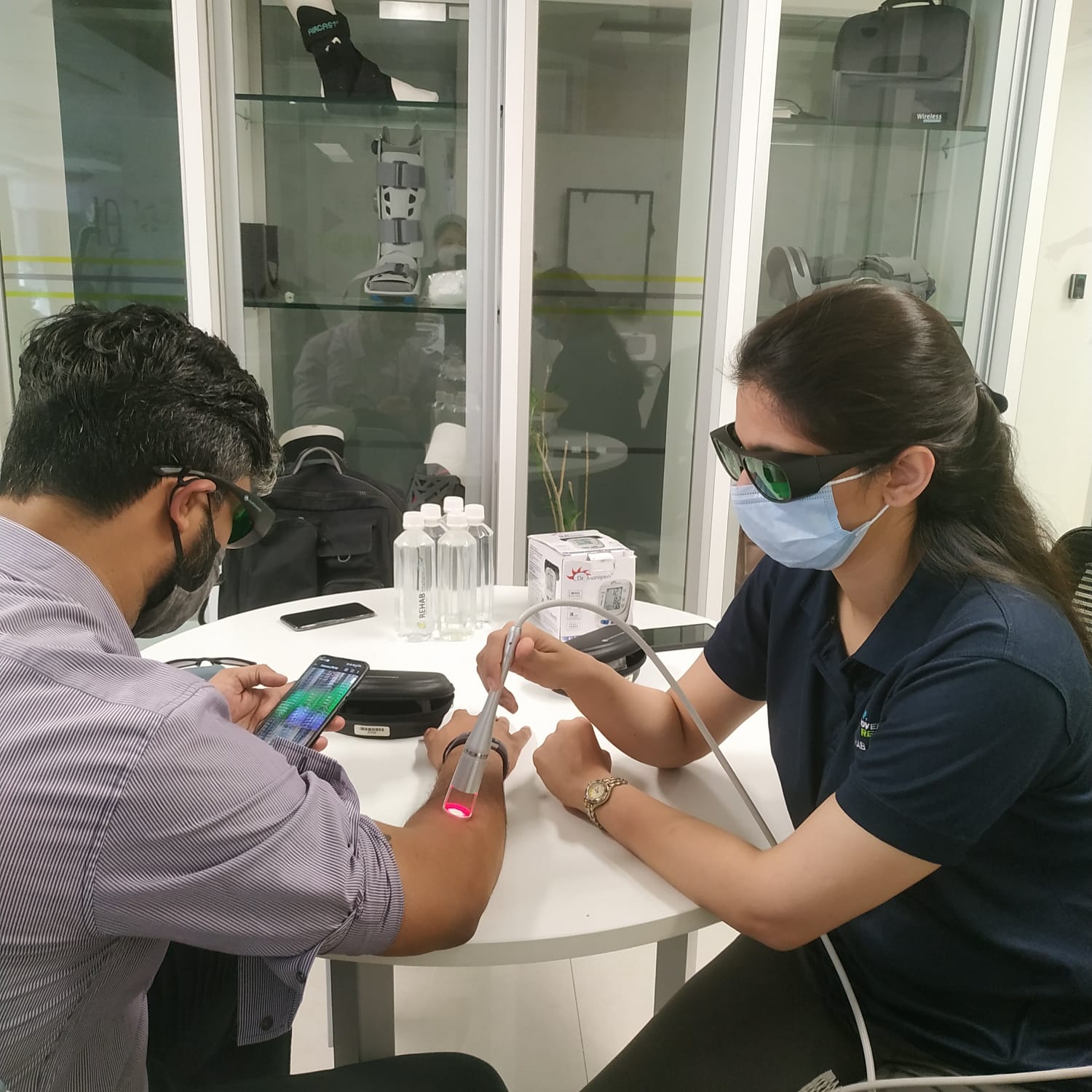
PAIN can be treated by methods like icing, splinting, ultrasound therapy and even LASER therapy. Recent studies have shown that ‘Low Level LASER Therapy’ helps in promoting repair along with reduction of pain and inflammation. There is also evidence that certain physiotherapy techniques like joint mobilisations work best. However, the treatment does not end as soon as the pain resolves. 

Pain killers are consumed every now and then whenever pain arises.

What could be a golden solution to get long term pain relief?

As the elbow works in correlation with the wrist, hand and the shoulder, any imbalance at this junction can restrict the entire chain’s function. Hence correcting such imbalances under the supervision of an expert Physiotherapist is one of the important aspects of treating tennis elbow. 

Holistic treatment involves strength training, either alone or in combination with certain electrotherapeutic modalities. K-taping when put together with appropriate exercise therapy can improve wrist as well as grip strength safely. With a suitable dosage of intensity, repetitions and frequency of exercise, endurance of the limb can be built to sustain larger bouts of activity.


Further on, to prevent reoccurrences in the future, the muscles need to be trained to tolerate specific movements and positions while carrying out the functions. For athletes with high demand activities, the right amount of supervised plyometric training adds to the overall confidence of the player on the field.

Thus, identifying the cause is important, in order to not just manage the symptoms of tennis elbow, but also to maintain the function of the muscles, as you CAN completely recover from this condition.

Dr. Neha Apte (PT)

Physiotherapist

Rehab Station, Pune

Wednesday, July 13, 2022

5 Yoga poses that you should do everyday and why!


Do you find yourself being in a static posture for really long hours while working? Most experts in the industry will tell you to constantly change your posture from sitting to standing or walking etc. You will be surprised to know that being static in a posture, to improve concentration is an ancient practice.

Back in the day, Yogis or Maharishis who wanted to sustain their Sukhasana, Padmasana or Siddhasana postures in order to meditate, needed a certain amount of physical strength and flexibility in the body.
Similarly, if your job demands you to sit in front of a screen for 8 to 10 hours in a day, your body needs to flexible as well as strong!

With our lifestyle demanding more static postures like sitting for long hours clicking away on our screens, the importance of exercise is just booming. Here are some asanas you can do daily to improve your efficiency.

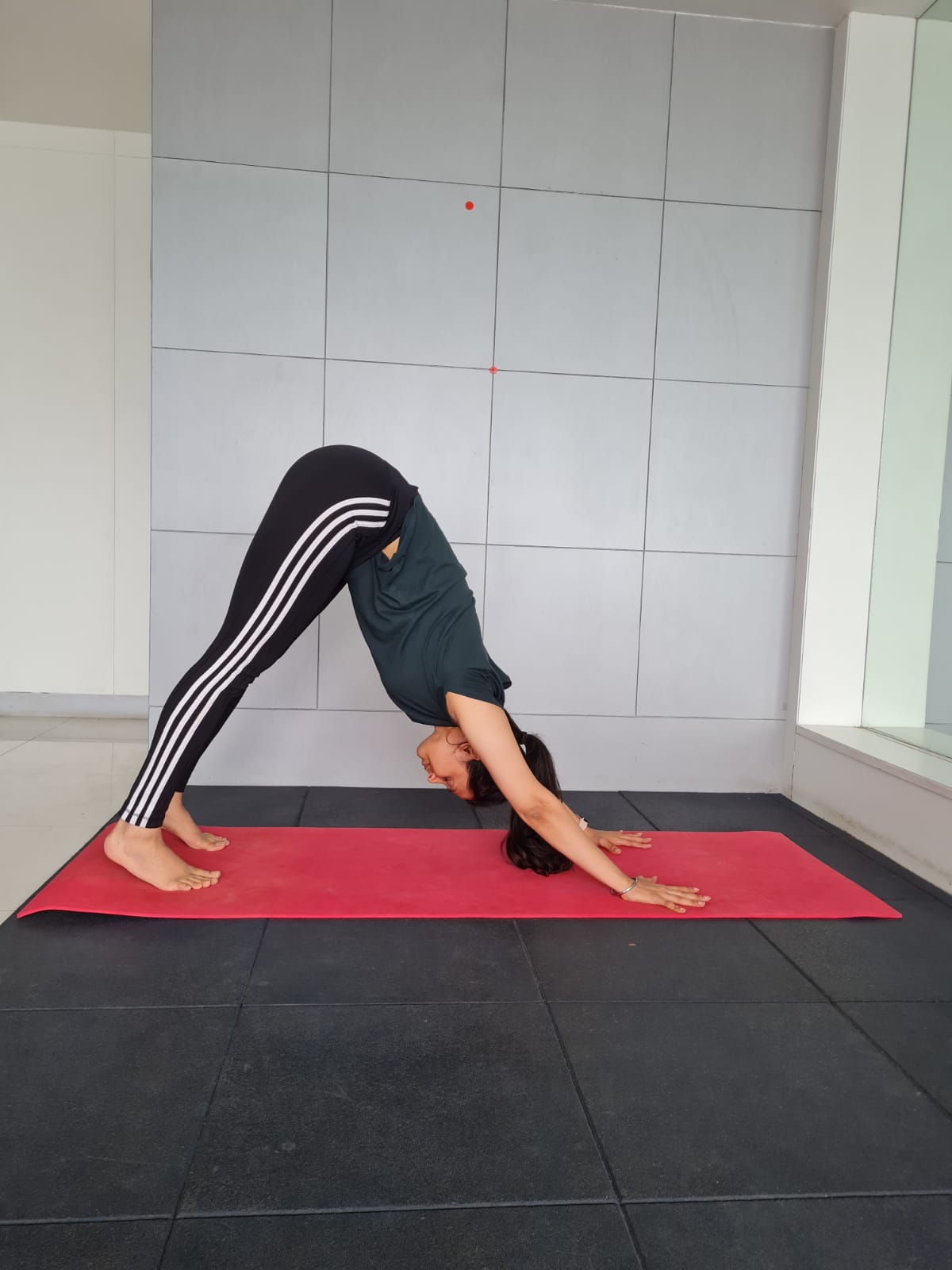
1. Adhomukhasvanasana or Downward facing Dog
This one is my personal favourite! It lengthens your spine, opens the shoulders , stretches the complete posterior chain and if done correctly, even opens the chest.


2. Malasana or the Garland Pose
This improves hip mobility and increases blood supply to your reproductive organs. It also maintains mobility in knees and ankles. For those who struggle with this can modify by using a brick or a stool. Those with knee pain, check with your physiotherapist first!

3. Setubandhasana or Bridge pose
Definitely a reversal posture of your desk sitting. Works your core, glutes and lower back. Can do variations with one leg up, or progress the extension into Chakrasana/ Urdhva Dhanurasana


4. Navasana or boat pose
Master this posture to safe-guard your back and knees. I promise your core will be on fire!


5. Viprita Karni : Legs up on the wall
A rejuvenating posture, this one relieves stress and helps calm the restless mind. Certainly it relaxes the legs and lower back. Also helps reverse the circulation. Bye-bye to swollen feet!


POSTERIOR CHAIN : THE MISSING LINK


 Show” muscles or “Go” muscles, what is your Goal?

Broad chest and bulging shoulders with well-developed and highly muscular biceps, triceps and forearms, V-shaped torso, 4 pack abdomen, thighs showing excellent cuts and so on….

Every sportsperson or fitness freak aims to achieve these ‘landmarks’, as these are considered to be prerequisites of the fitness and strength.

Beware!! These are just the ‘show’ muscles, the muscles you can see when you stand in front of a mirror.

Have we thought about our ‘Go’ muscles?? Most of us have not.

That’s why we encounter problems like hamstring pull, severe IT Band tightness, groin pain, low back spasm, neck spasm, very tight calf muscles, heel pain, and major injuries like shin splints, stress fractures, calf or thigh muscle tear etc. etc.

All these problems or injuries can be avoided to a greater extent if one develops ‘Go muscles’, i.e. ‘Posterior chain muscles’ along with ‘show muscles’.

What is a Posterior chain?

It’s a link of muscle groups starting from back of neck to end of heels. They start from,

  • back of neck
  • thoracic or upper back
  • low back
  • hip region
  • back of the thigh
  • calf
  • heel region

Posterior chain is the Engine of our body and is extremely useful in,

  • providing extra power for explosive actions.
  • Boosting athlete’s performance.
  • Preventing injuries.
  • Protecting muscles from unexpected forces.
  • Maintaining posture and balance.

Though each posterior chain muscle has a specific and well defined function, no muscle of posterior chain works alone. All the muscles work synergistically as a team and hence it is called ‘Posterior (kinetic) chain’.


In short, it doesn’t matter whether you are a sportsperson or not, you must have a strong posterior chain’.

To maintain fitness, pain-free activity, robust posture and excellent Show muscles, you must have strong Go Muscles!

Tuesday, May 17, 2022

Training in hot weather!

Let's talk about the factors to be considered while training in hot weather! 


Before putting some guidelines out there, we will try to understand what happens to the human body when exposed to hot environment. 
All primates including humans, generate heat either by increasing muscle activity or by reacting to the hot environment which exceeds the body temperature. 

How do humans differ from other primates?
Firstly, humans have the advantage of losing heat via perspiration (sweat). In addition, humans can cope up with their maximal potentials in terms of exercise for prolonged duration in temperatures ranging not more than 41 degree C (106 degree F). Having said that, there are different modes of heat transfer. Do you know what is the easiest way for humans to do so? 

What could possibly go wrong if you are not careful enough to interpret those symptoms?
The common possibilities are heatstroke, exercise associated collapse/ heat syncope and cramps. 

1) Heatstroke - Heatstroke is a life-threatening emergency condition that occurs when your body temperature is greater than 104 F (40 C). You may develop confusion, irritability, headache, heart rhythm problems, etc. You need immediate medical attention to prevent brain damage, organ failure or even death

2) Exercise associated collapse/ heat syncope - Exercise-associated collapse is feeling lightheaded or fainting immediately after exercising, and it can occur especially if you immediately stop running and stand after a race or a long run. Heat syncope is a feeling of lightheadedness or fainting caused after standing for a long period of time, or standing quickly after sitting for a long period of time in high temperatures. 

3) Cramps - Cramps occur due to fatigue. It's a presumption that "Oh, cramps are just an electrolyte imbalance. Load him/her with Oral Rehydrating Solution and it'll be gone like it never existed in first place." That's not always true! Cramps occur due to spinal neural reflex which in turn is a result of fatigue. Too much to grab, don't worry; just stretch the muscle along with application of ice and Poof ! You're cramp free! 


Pay attention to these symptoms as it affects the training. 

If you ignore these symptoms, your condition can worsen, resulting in a medical emergency. Signs and symptoms may include:

  • Muscle cramps
  • Nausea or vomiting
  • Weakness
  • Fatigue
  • Headache
  • Excessive sweating
  • Visual problems
  • Confusion
  • Irritability
  • Low blood pressure
  • Increased heart rate
  • Dizziness or lightheadedness


How can one avoid such problems? Well , here are some measures to be taken when not feeling "okay"!
1) Stop exercising immediately and get out of the hot environment. If possible, have someone accompany you who can help monitor your condition.
2) The most effective way of rapid cooling is immersion of your body in a cold- or ice-water tub.
3) In cases of heat exhaustion, remove extra clothing or sports equipment. This will help cool your body faster.
4) In running events, there are 'Flag' warnings that correspond to the degree of heat and humidity. For example, a yellow flag requires careful monitoring, and races are canceled in black flag conditions.
5) If you're used to exercising indoors or in cooler weather, take it easy at first when you exercise in the heat. It can take at least one to two weeks to adapt to the heat. As your body adapts to the heat over time, gradually increase the length and intensity of your workouts
6)  Reduce your exercise intensity and take frequent breaks.
7) Dehydration is a key factor in heat illness. Help your body sweat and cool down by staying well-hydrated with water. Don't wait until you're thirsty to drink fluids.
8) Lightweight, loose fitting clothing helps sweat evaporate and keeps you cooler. Avoid dark colors, which can absorb heat. If possible, wear a light-colored, wide-brimmed hat.
9) Exercise in the morning or evening, when it's likely to be cooler outdoors. If possible, exercise in shady areas, or do a water workout in a pool
10) Apply sunscreen as a sunburn decreases your body's ability to cool itself and increases the risk of skin cancer

Heat-related illnesses are largely preventable. Take some basic precautions and your exercise routine doesn't have to be sidelined when the heat is on!!

Friday, May 13, 2022

Physiotherapy after TKR (Total Knee replacement) Surgery


Physiotherapy after TKR (Total Knee replacement) Surgery:


Some Facts

Before TKR or knee replacement surgery

1.       A person, who is suffering from severe pain in the knee joints, avoids activities like climbing up and down the stairs, running, cycling, sitting on the ground, squatting, sitting cross legged or even walking.               

As the activity slows down, strength of thigh muscles, muscles around knee joint, calf and foot muscles reduces.

2.       If a person is suffering from osteoarthritis or rheumatoid arthritis, a deformity is developed in the knee joint.

Due to this deformity, wrong style of walking leading to wrong posture or “Gait Pattern” is developed.

After TKR or knee replacement surgery

1.       Pain in the knee joint reduces.

2.       Deformity of the knee joint is corrected.

But still there is some nagging pain in the knee!!!

Many a times this pain is unbearable and is troublesome physically and mentally.

This is due to lack of muscle strength.

Due to lack of muscle strength in legs, person even after a successful surgery, is not confident to walk or to climb up and down the stairs.


Statistical data tells that 25-30% of patients who have undergone the TKR surgery are unhappy with the results!!

The most common complaints are,

“I can’t tell you what is wrong.  I am not comfortable with my knee joint. I still don’t feel like doing any physical activity”.

“I have spent so much of money and got my knees replaced but the pain is still there.  I am not sure about success of this surgery.”

This happens because during (Robotic or Conventional) TKR surgery

1)      Muscles are dissected or cut to reach up to the bones.  After the replacement of knee joint, these muscles are sutured or stitched.

2)      Two major ligaments of the knee joint (ACL-anterior cruciate ligament and PCL- posterior cruciate ligament) are totally cut off and removed. Necessary design features are incorporated in the knee joint implant to take care of loss of these ligaments.

3)      To correct the deformity of the joint, ligaments, tendons and muscles are partially ‘released’ from the bone attachment. Because of this coordination between signal from the brain and   joint movement is disturbed.

4)      This signals sent by the brain to the muscles and ligaments to do a movement, known as Proprioception’, may not be still accurate, after the surgery.

5)      Till the time these dissected/cut muscles do not get functional, some pain or limitation on joint movement remains.

Therefore, physiotherapy plays a very important role in total recovery of the TKR patient.


Physiotherapy post TKR:

·         Get rid of residual pain post TKR surgery.

·         Re-educate or train the muscles around the knee joint and all muscle groups of the leg post TKR surgery.

·         Regain muscular strength

·         Correct the walking pattern and locomotion or movement of the knee joint (Correct the ‘Gait’ or posture of patient).

·         Regain ‘burst energy’ or ‘firing power’ in muscles, whenever body demands it.


Buddy Up Against Diabetes!!

  Buddy Up Against Diabetes!! Rahul: Hey there, Suresh! You know what's been bugging me lately? Diabetes. It's everywhere these ...