Thursday, October 13, 2022

Why Physiotherapy after Hysterectomy???

Why Physiotherapy after Hysterectomy???

Hysterectomy is an operation to remove the uterus and sometimes other reproductive organs such as the cervix, fallopian tubes and ovaries. Physiotherapy before and after your operation is recommended to help you return to your normal daily routine as soon as possible.


Hysterectomy is the second most frequently performed surgery in the females. About 20-30% women are likely to undergo hysterectomy at some point on their lives. The reasons for hysterectomy can be various and the surgical approach required for it are also different, among which the abdomen route brings greatest complications and majority of total hysterectomies are performed via open abdomen route worldwide. Patients undergoing hysterectomy are susceptible to complications that may present immediately or in later life.


In view of this, physiotherapy plays an important role in this processes for both before and after surgery and minimizing the complications with measures such as: 

•       Early walking

•       Minimizing post-operative pain

•       Preventing the development of adhesions over your scar

•       Thrombosis- blood clots blocks veins and arteries

•       Walking pattern & Posture 

•       Pelvic floor muscle dysfunctions 

•       Abdominal weakness

•       Intensive respiratory therapy- use of respiratory physiotherapy techniques preventing breathing complications.


 As post-surgery it takes time for an incision to heal. After two weeks a wound only has 10% of its original strength. By six weeks most internal healing has occurred and the tissue has regained 75% of its original strength. So to assist the healing and a proper recovery a physiotherapist advice is needed.  


   Post-surgery physiotherapy is required to make you mobile, to prevent scar adhesions, to strengthen abdominal and pelvic floor muscles. 


So how does a physiotherapist help in above factors?            


Things that you can do before surgery:

•       Maintain fitness by walking daily – aim for up to 30 mins a day.

•       Practice deep breathing exercises.

•       Practice huffing and coughing techniques which will help to clear cough from chest which usually develops following the surgery.        

 •      Manage any current lung conditions or chronic cough together with your general practitioner.


Physiotherapy after surgery: 

You may be in hospital for 5-7 days depending on the type of hysterectomy and your recovery rate. When you have been discharged from hospital it is important to begin physiotherapy program created by physiotherapist for you.                                                                                                                                                                            

Physiotherapy when you are in Hospital: (week 1)

•       Mobility- early walking, bed mobility- side turning in bed, getting up from the bed, sitting in bed

•       Breathing techniques

•       Ankle Pumps, elevation of lower limbs to prevent vascular complications

•       Abdominal splinting techniques for wound healing

•       Electrotherapy – for pain relief                                                                                    

•       Lower limb strengthening exercises and maintaining range of motion exercises

•       Advice on scar management after discharge


Physiotherapy after going back home: (week 2-6)

Now your symptoms start reducing and you will gradually be able to return to your normal daily routine.

·         Progressing strengthening exercise

·         Progressing Abdominal exercises

·         Pelvic floor exercises- doing them in more functional positions

·         Including more functional activities relating to your hobbies and work

·         Pacing of activities


Physiotherapy for once you start doing all your daily activities: (week 7 onwards up to 12 months)


Now one will be gradually returning to your activities of daily routine and experiencing little or no pain.

After 6 weeks one can start lifting activities without pain, but not to lift heavy weights for up to 6 months.

Your physiotherapist will now concentrate on functional activities relating to achieve your Goals, your physiotherapist will design a program just for you according to your personal goals. So one must consult a physiotherapist post hysterectomy for your overall fitness and improve quality of life. So one can go back to your previous life healthy, travel, go shopping and stay fit and be happy.


                                                “Enjoy the adventure called life"

  -Dr. Disha Shah (PT)

   Community and Women's Health Physiotherapist
   Team Rehab Station

Tuesday, September 20, 2022

ALZHEIMER'S DISEASE

ALZHEIMER'S DISEASE


Courtsey: https://en.wikipedia.org/wiki/Alzheimer%27s_disease#Pathophysiology 

Neuro- related to brain

Degenerative - progressive decline of function

Disease - condition affecting the person


What happens inside brain in Alzheimer's disease?


How do you know it is Alzheimer's disease?

- Forget the names of places or family members

- Forgetting recent events or conversations

- Having trouble identify everyday objects

- Trouble performing daily activities. 

- Cannot plan tasks. eg. dressing everyday

- Repeating statements over and over

- Getting lost in familiar places like neighbourhood


If you can’t stand up by yourself, you can’t live by yourself. Exercise keeps you independent!” 


Barbara Adams, a physiotherapist and author of Dementia and the Importance of Exercise wrote,

 "Exercise improves safety of transfers from chairs and toilets and getting into and out of bed; body image and a sense of achievement; ability to do household tasks without help; behavior and mood; appetite; and physical function and cognition.” 

A physiotherapist can help you learn more about how this drug-free therapy benefits individuals who have Alzheimer’s disease. Having independence in daily activities also gives a small measure of self-confidence.

Consider consulting a physiotherapist to avail of these benefits. Contact +91 8888833508 for more information.

-Dr. Sukanya Dandekar (PT)

Senior Neuro Physiotherapist

Rehab Station Pune

Monday, September 5, 2022

CORE EXERCISES : WHY YOU SHOULD STRENGTHEN YOUR CORE?


CORE EXERCISES : WHY YOU SHOULD STRENGTHEN YOUR CORE?

You know core exercises are good for you — but do you include core exercises in your fitness routine? Here's why you should.


Strong core muscles make it easier to do most physical activities

Core exercises improve your balance and stability

Core exercises can help tone your abs

Strong core supports better posture

Strong core helps you age well

Strong core reduces risk of back injuries

Core exercises can help you reach your fitness goals faster

Want to add diversity to your workout ?

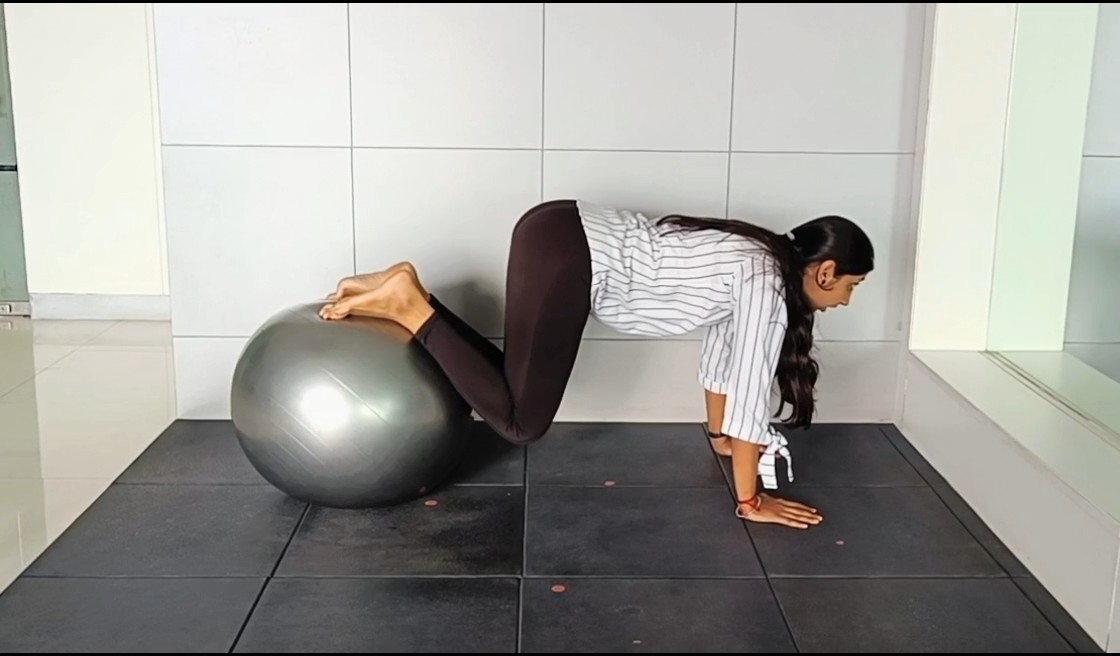
Let's use GYM BALL for CORE EXERCISES 

Using a gym ball activates the stabilizing muscles in your core and helps you connect with your centre of gravity. The unstable surface of the exercise ball engages your core muscles to exert extra effort in keeping your whole body balanced while exercising. Not to mention, the elevation offered by the ball allows you to perform a wider range of motion and engagement with smaller muscle groups, inadvertently ignored when working out on a flat surface.


The exercise ball, stability ball, swiss ball, gym ball - whatever you want to call it - that's what we are using to train our core today. 


1) ABS CRUNCHES


2) OBLIQUE CRUNCHES


3) SIDE CRUNCH


4) HIGH PLANK


5) FOREARM PLANK


6) REVERSE CRUNCH


7) HAND TO FEET PASS


8) HIP THRUST


9) BIRD DOG


10) ABS TUCKS


Connect to your core and you'll find strength. Act from your core and you'll move mountains.


- Dr. Mayuri Inamdar (PT)

Team Rehab Station, Pune    

Monday, August 22, 2022

OSTEOARTHRITIS - RISK FACTORS AND TREATMENT!

OSTEOARTHRITIS - RISK FACTORS AND TREATMENT!


WHAT ARE THE CHANCES I WILL SUFFER FROM OSTEOARTRITIS (OA)? 

OA is the most common joint condition and is a growing cause of disability. More than 60% of this population is suffering from Knee joint arthritis.


WHAT ARE THE RISK FACTORS FOR DEVELOPING OA?

Some major risk factors for developing this condition are-

- Increasing age
- Previous joint injuries (example- meniscal tears),
- Being overweight or obese 
- Arthritis is more common is females
- Also  family history does play a role

-Urbanization is also associated with many health changes including early onset of arthritis. This maybe related to increases in bodyweight, sedentary lifestyle and dietary changes.

See your physiotherapist and get assessed! 

· 

CAN PHYSIOTHERAPY HELP ME? HOW?


PHYSIOTHERAPY  IS  THE  CORE  TREATMENT  FOR  THE  PREVENTION  AS  WELL  AS MANAGEMENT  OF  OSTEOARTHRITIS 

In case of pain, physiotherapists use Electrotherapy- advanced modalities which have proved to help reduce pain and inflammation in the joints . The immediate effect of pain reduction needs to be maintained with a good exercise program!  


EXERCISE IS THE NEW AGE MEDICINE...


The best physiotherapy-customized exercise program can -

Maintain FULL JOINT RANGE OF MOVEMENT,               

Improve muscle STRENGTH and reduce loading of joints

Enhance the PHYSICAL ABILITY to perform DAILY ACTIVTIES

Improve BALANCE and reduces RISK OF FALL

Improve sleep patterns, mood and overall cardiovascular health


MY DOCTOR SAYS I HAVE STARTED OA RECENTLY, 

CAN I AVOID SURGERY?


YES, Physiotherapy can definitely delay or completely avoid chances of surgery.

Physiotherapy started early on in this condition, can act like a 'stitch in time which saves nine.'

Exercise is always the first line of managing OA. Evidence has proved that a good tailored exercise regime is safe and effective way of dealing with OA. Only in case of severe arthritic changes and deformity, you may have to opt for a joint replacement. 


CAN RUNNING GIVE ME OSTEOARTHRITIS?

Evidence suggests that in-fact recreational runners have reduced chances of developing osteoarthritis,.

Type of surface for running (tar road, a non-cemented surface, sand), quality and design of the shoes, proper warm up, cool down exercises and also strength training exercises - all affect the loading on joints. 

We strongly recommend you to visit your physiotherapist to know more and understand what is best for you!


DO I NEED PHYISOTHERAPY AFTER SURGERY?

YES. Physiotherapy after a knee replacement is a MUST and should not be avoided. A surgery maybe the answer to your ageing knee problems but it does not give you the guarantee to return to functional activities without the help of physiotherapy exercises. 

A physiotherapist can guide you to first recover the range of motion and then regain the muscle strength, improve balance and correct your walking pattern.


Hope you have fun exercising, with or without arthritis, with or without surgery.


Invest in your health today, to save yourself from disease tomorrow. 


     -Dr. Neha Gogate (PT)

     Musculoskeletal Physiotherapist

Team Rehab Station, Pune                         .

Thursday, August 18, 2022

Sports Hernia (Athletic Pubalgia) - Symptoms and Treatment


Sportsman’s hernia has been a hot topic of discussion since Indian Cricketer K.L Rahul sustained the injury. Let’s know more in detail about the condition and role of physiotherapy in preventing the same.

                                                 Image Credits- The Economic Times

Sportsman’s hernia is a pain syndrome of the lower abdomen and groin. It is a painful, soft tissue injury that occurs in the groin area. The reason why it is defined as sportsman’s hernia is that it was originally seen in sportsmen. It most often occurs during sports that require sudden changes of direction or intense twisting movements and increased pelvic rotation that would lead to painful groin.  However, it may also develop in people who do not do sports.

What is it commonly known as….

Some common terminologies for sports hernia are athletic pubalgia, sportsman’s hernia, Gilmore’s groin, pubic inguinal pain syndrome-PIPS, sportsmen’s groin, footballer’s groin injury complex, hockey player’s syndrome, athletic hernia

What structures are affected due to sports hernia?

The soft tissues most frequently affected by sports hernia are the oblique muscles in the lower abdomen. Especially vulnerable are the tendons that attach the oblique muscles to the pubic bone. In many cases of sports hernia, the tendons that attach the inner thigh muscles to the pubic bone (adductors) are also stretched or torn.

                                           Image credits- OrthoInfo- AAOS

What are the common symptoms which any athlete can look for?

  1.         Exercise-related groin pain
  2.      Pain is typically localized on the lower outer end of the rectus abdominis muscle (belly muscle)
  3.      Increased with sudden acceleration, turning, twisting, hitting, changing directions
  4.      Sitting and getting up, coughing and sneezing 
  5.      There is a feeling of hardness in the groin and difficulty getting up from bed
  6.      The pain disappears upon resting for a while and then it re-starts immediately and attains the peak when resumed the sports activity at full force

Examination by expert reveals-

  1.          Sensitive groin area, in proximity of painful area
  2.         A slight bulge may be seen on the skin surface while the patient is standing

Diagnosis cannot be only dependent on the signs and symptoms but the patient’s history and physical examination

How to treat the condition?


Physiotherapy works on correcting the imbalance of hip region by:

  1.      . Increasing hip mobility
  2.      . Improving hip rotations movements
  3.       . Strengthening abdominal and core, hip muscles

These factors help in controlling the rotation movements and pelvic stability which are proven to be the effective in preventing the occurrence of initial or recurrent damage in sports hernia.

In many cases, 4 to 6 weeks of physical therapy will resolve any pain and allow an athlete to return to sports.

Surgical Treatment

After the 6 weeks of non-surgical rehabilitation if the pain comes back after resuming the sports activities, one needs to consider surgery as a treatment option.

Following the surgical procedure most athletes are able to return to sports after 6 to 12 weeks.

 - Dr. Aditi Dole (PT)

Sports Physiotherapist

Team Rehab Station Pune

Buddy Up Against Diabetes!!

  Buddy Up Against Diabetes!! Rahul: Hey there, Suresh! You know what's been bugging me lately? Diabetes. It's everywhere these ...